

Table of Contents
Two sides of the same problem
With ultra-fresh food, a lot of planning happens every day, and often a portion of it goes unsold. Write-offs, returns, and overproduction are part of everyday life for many bakeries, retailers, and foodservice businesses. How much of that could have been avoided?
The numbers show the scale of the problem. Every year, food worth around 400 billion euros is thrown away worldwide. At the same time, around 1 trillion euros in revenue is lost because goods sell out too early. Both losses have the same cause: inaccurate quantity planning.
The tricky part is that these two types of losses are visible in different ways. Overproduction shows up on the balance sheet. Missing stock, however, is invisible because it disappears as lost revenue.
Why experience alone isn't enough
"We've been doing it this way for years." You hear this often, yet the quantities are frequently off.
A real-world example: A bakery with nearly 30 branches where every sales clerk orders based on their own intuition. The result is that goods are either sold out too early or have to be thrown away in the evening.
This is not an isolated case. In food retail and foodservice, gut-feeling decisions often lead to inaccurate order quantities. Experience is valuable, but it reaches its limits when multiple factors are at play simultaneously. A hot day that coincides with the start of the holidays changes demand instantly. That is almost impossible to predict by intuition alone.
How the foodforecast AI works
The foodforecast AI processes historical sales data alongside external influencing factors—all at the same time, for every branch and every item:
• Weather
• Day of the week
• Public holidays and school breaks
• Seasonality
In doing so, the AI focuses primarily on two timeframes: the last 8 weeks and ±4 weeks around the same period over the past 2 years. This allows it to identify seasonal patterns just as accurately as current trends.
From forecasting to ordering suggestions
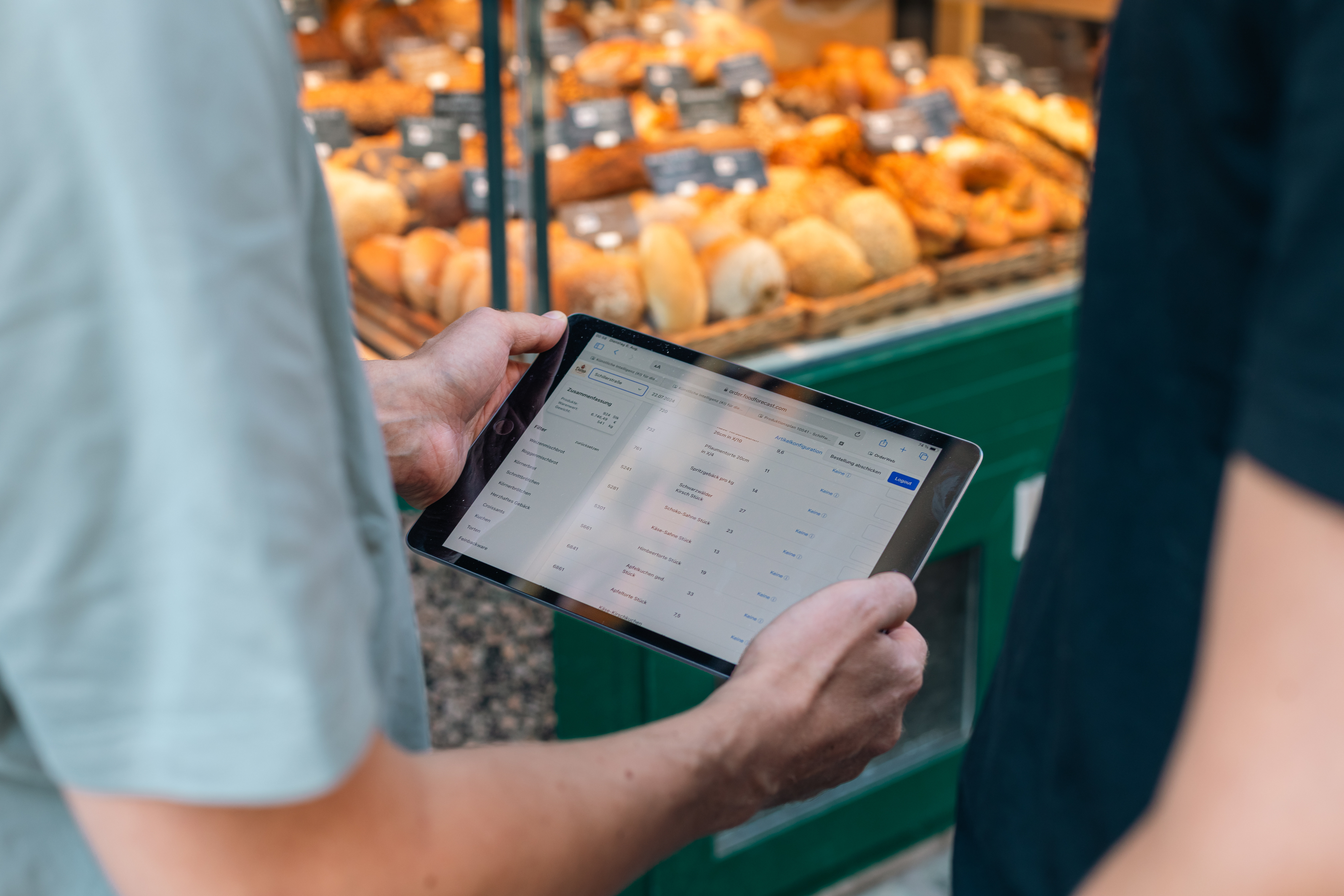
Using this data, foodforecast’s order optimization calculates a daily sales forecast for every location. This results in a specific order suggestion per item, which is ranked according to your individually adjustable inventory pressure. Each business decides for itself how much product availability matters, such as having full shelves until closing time versus minimizing returns.
This eliminates the guesswork and prevents both overproduction and underproduction. Order quantities become reliable. Plus, the team has more time for what really matters: the customers.
The results in numbers:
• up to 11% more revenue
• up to 35% fewer returns
Less food waste also means lower costs
Food waste is usually seen as an environmental issue. For our clients, it is just as much a financial one. Reducing food waste saves on:
• raw material costs
• labor costs, which otherwise goes into unsold goods
• Energy costs for production and storage
• additional retail storage costs, because ordering processes are improved
The most important lever is at the beginning of the chain, not the end. Raw materials and energy are only truly saved if food waste is prevented from the start through accurate sales forecasts. Solutions that repurpose surpluses are useful, but they do not recover the resources that have already gone into production.
Outlook:
Would you like to know what AI-based forecasting can do for your business? Get in touch now! https://meetings-eu1.hubspot.com/philipp-bartholomaios/foodforecast-erstgespraech?uuid=3ea900b5-59c1-4f7e-85da-23e712f533dc


Increase your profits and relieve your staff - get in touch
With foodforecast, you can lead your company into a more sustainable future. Revolutionize your food production with us and minimize food waste. Our goal is to work together to achieve a positive impact on the environment, society and your profit.